Product Design Leadership · 2026

From Product Craft
to Design Leadership

I began as a hands-on product designer,went on to lead a 14-person creative organization,and now run the FORCETELLER business unit.

Kwantae Kim14+ Years · SurveyMonkey · FORCETELLER · B2C & B2B

About

From making the work myself to enabling a team to make it together

I have worked in design since 2012. At SurveyMonkey, I led a global marketing web system and the launch design for MRX. After joining UN7QI3 in 2021, my scope expanded from Design Lead to Creative Lead and then to product, marketing, operations, and revenue ownership.

The design team grew from four people to eleven, including content designers, and then to a 14-person creative organization with three art designers. As the team grew, I spent more time on hiring, performance, onboarding, and how we review work.

Career at a glance

Team growth
4 → 11 → 14

Design → content included → creative

Direct reports
4

Leadership experience

Indirect reports
10

Within the 14-person organization

People management
Hiring · Performance · Onboarding

Performance decisions · weekly 1:1s in month one

  1. 2012—2013UX/UI Designer

    Designed interfaces and interactions, implemented HTML/CSS, and handled QA.

  2. 2013—2021Lead Visual UX Designer · SurveyMonkey

    Designed marketing web experiences, design systems, and B2B product UX.

  3. 2021—NowDesign → Creative → Product Business Lead

    Led the design organization and now runs the FORCETELLER business unit.

Design Organization

As the team grew, I changed how we reviewed work.

The creative organization included eight Product Designers, three art designers, and three content designers. When every directional decision began flowing through me, I realized I had become the constraint slowing the team down.
Creative organization
14 people

Product Design · art · content design

Product Designers
8

2 leads · 2 senior · 1 mid · 3 junior

First direction review
Within 3 days

Align on the problem and direction early

Monthly knowledge sharing
48 sessions

2021—2025 · five years

01

Design Review

We reviewed early drafts instead of waiting for polished screens.

I scheduled the first review within three days of kickoff. We began with the user problem and the reason behind the proposed direction, reducing late changes to fundamental decisions.

I delivered most substantive feedback in live review meetings while we looked at the work together, using Figma comments for lightweight follow-ups. Every design passed my review before it went to executives for approval.
02

Hiring & Coaching

I selected the people we worked with and supported their growth.

I participated in both the practical and executive interview stages. During a new hire’s first month, I held weekly 1:1s to align on culture and expectations, extending that cadence when needed.

I made performance decisions that informed compensation reviews. At SurveyMonkey, I also contributed with my director to work on IC and manager career tracks.

03

Monthly Sharing

For five years, I made room for a short monthly learning session.

Starting in August 2021, I prepared a five-to-ten-minute talk for each all-hands meeting. Topics ranged from 1:1s and data interpretation to design systems, DACI, and feedback—whatever the team needed at the time.

I continued the practice for 48 sessions across five years. It remains one of the records I value most because it reflects consistency, not a one-time initiative.
User Research

Meeting users changed the problem we needed to solve.

At SurveyMonkey, I studied how market-research professionals worked. At FORCETELLER, I examined why people searched for content and chose to pay. Interview and segment-survey findings became inputs to product decisions.
MRX expert interviews
21

Workflows and expectations of research professionals

MRX EAP customers
150+

Participants before general release

FORCETELLER IDIs
12 · 9

Participants in 2022 · 2025

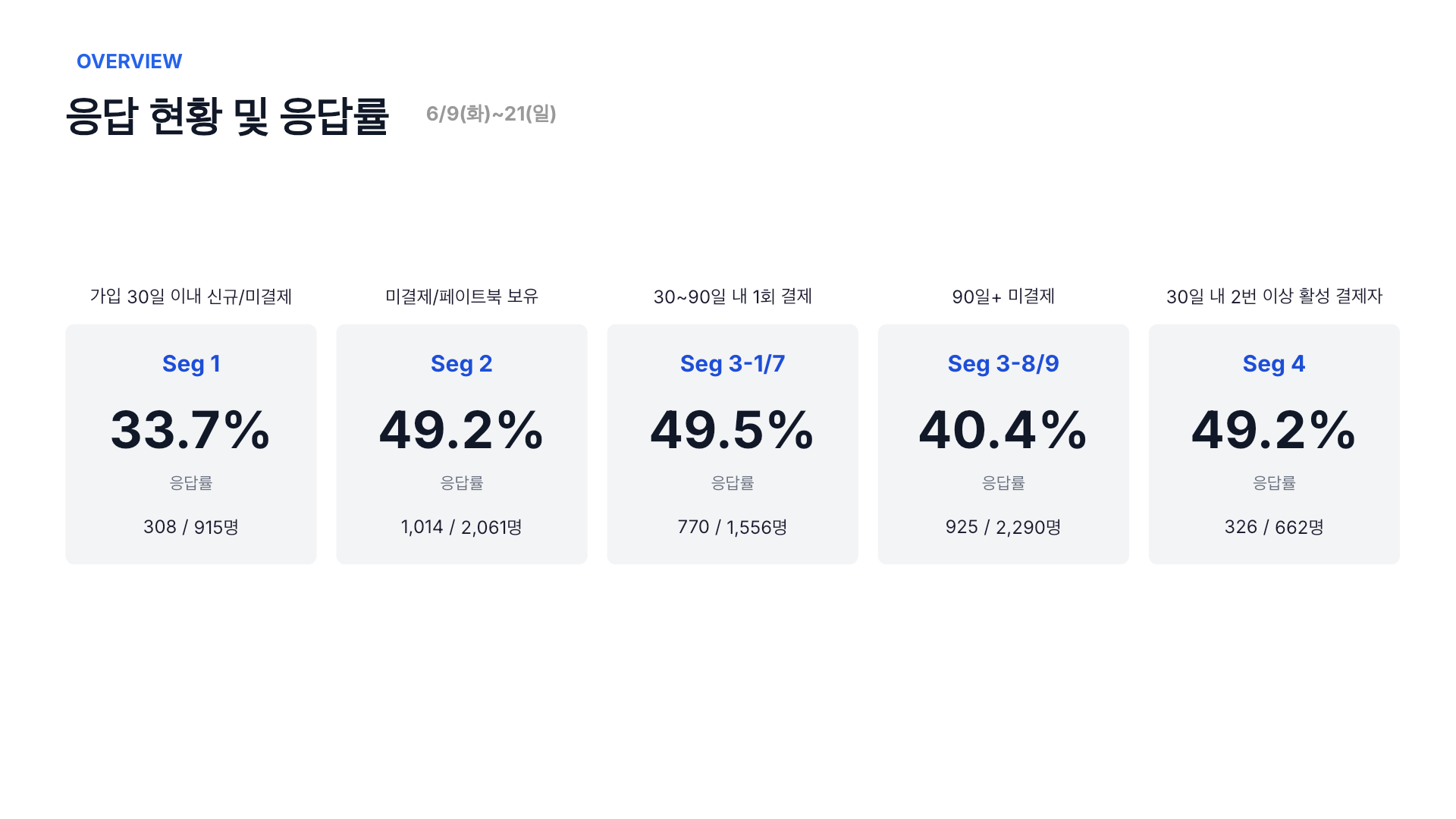
Behavior and payment survey
3,343

2026 · five user segments

01

SurveyMonkey · MRX

We built a product market-research customers could use in real workflows.

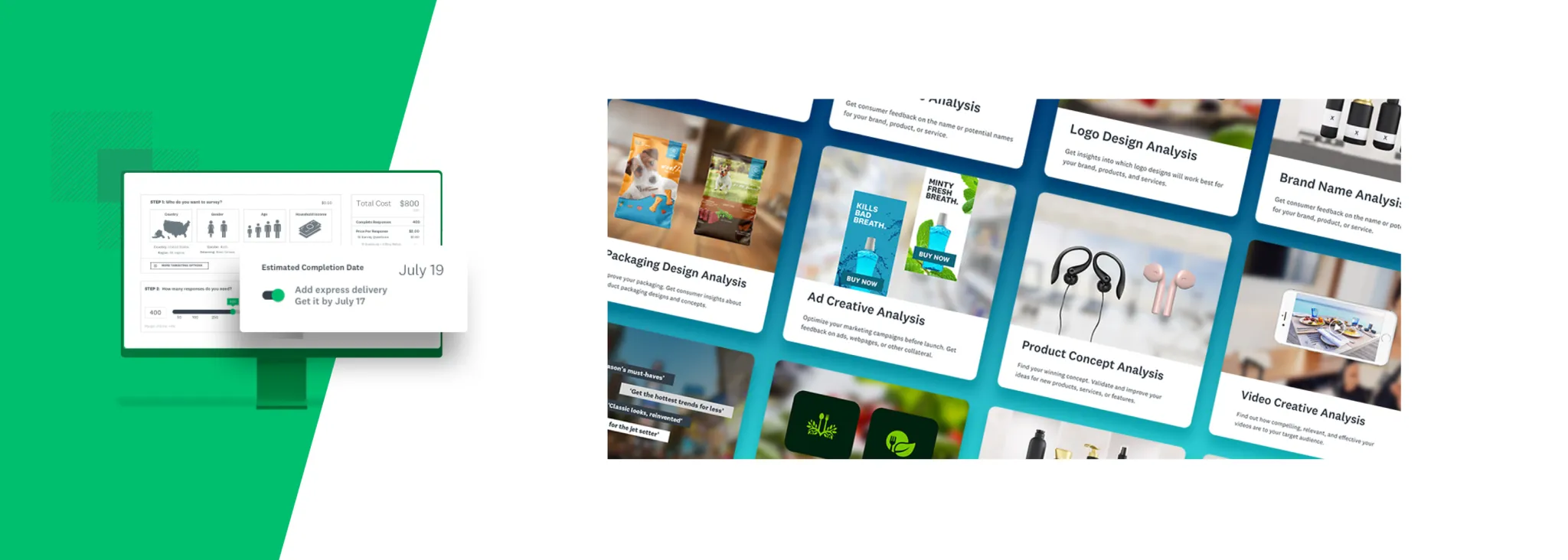
I participated in interviews with 21 industry experts. Together with more than 1,000 opportunity-area responses collected by the team, the research clarified customers’ work, price expectations, and required deliverables.

As Lead UX Designer, I designed the product from concept through final UI. I led the direction, quality, and schedule of two junior designers working on marketing, and improved the product’s information hierarchy using interview feedback.

02

FORCETELLER · IDI

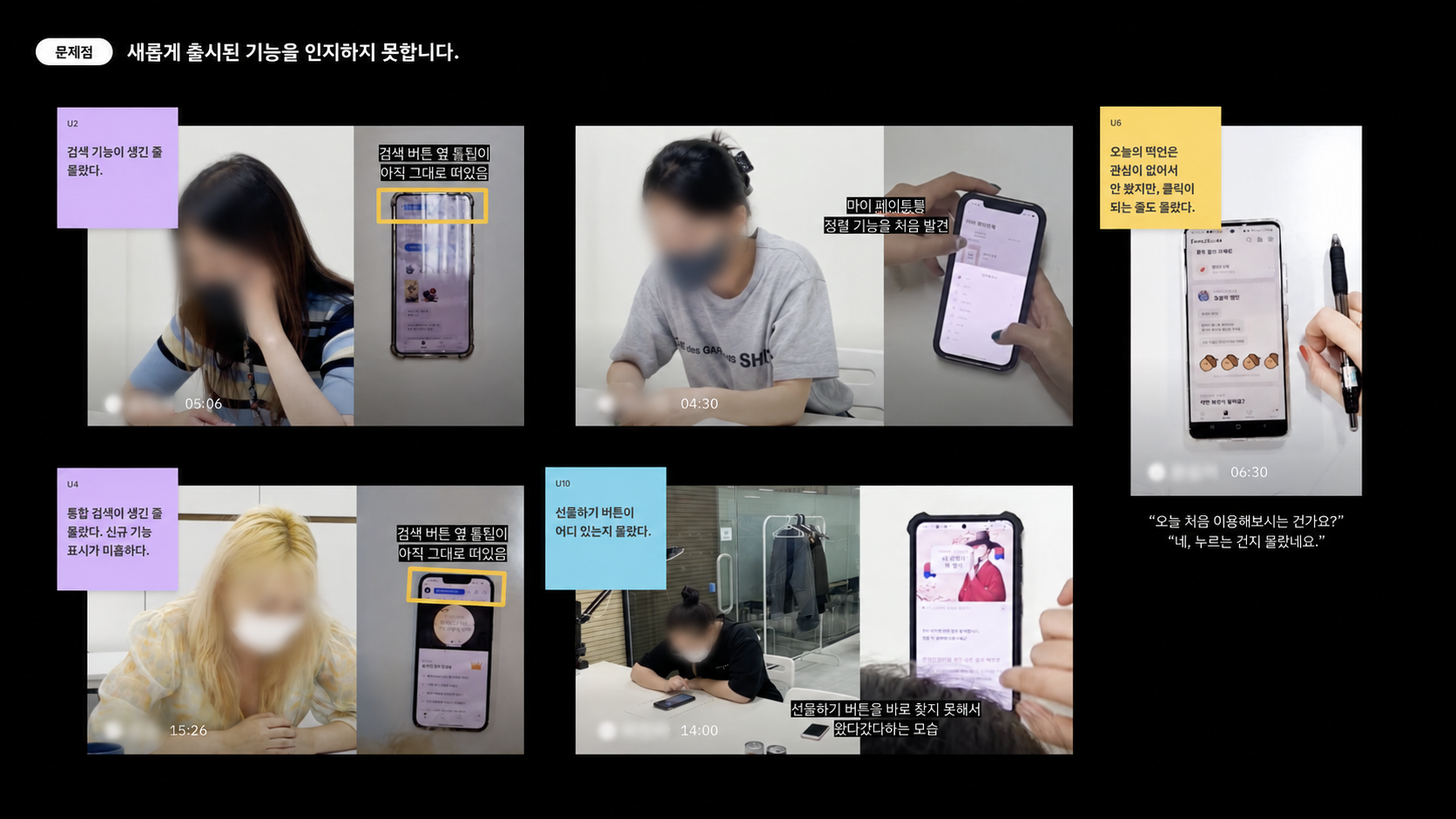
Customers did not know that an existing feature was there.

In the 2022 and 2025 IDIs, we observed people failing to find features or understand why they should use them. Fodeok Level was one example, and the finding later led to Lucky Level, which let non-paying users participate as well.

For the first IDI, I designed and facilitated most sessions while helping designers build research experience. By 2025, participating designers shared facilitation evenly; I reviewed the hierarchy of findings and the resulting product direction.

03

2026 · Customer Survey

Before lowering prices, we investigated why customers hesitated to buy.

Using five segments defined by executives and a data analyst, I designed the questions and analyzed 3,343 responses. We compared barriers to a first purchase with reasons repeat purchasing stopped, then agreed with executives on directions such as pre-purchase samples, personalized recommendations, and quality improvements.

Design Systems

Maintaining quality when many people contribute

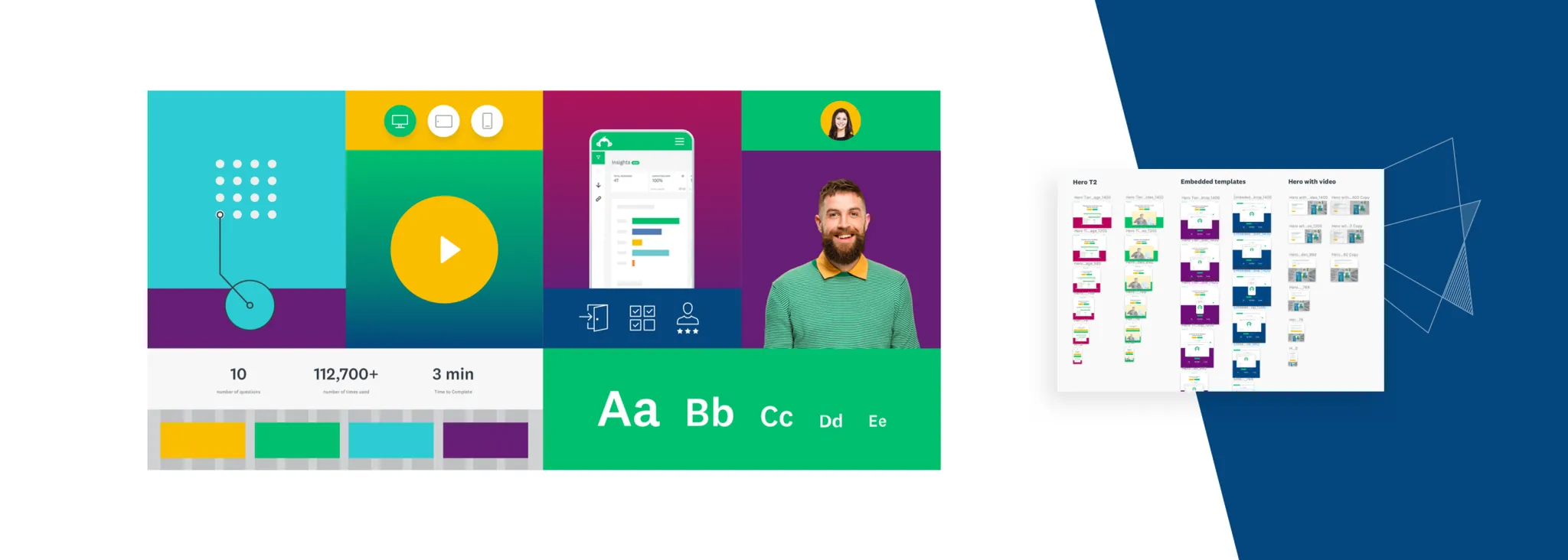
At SurveyMonkey, I built a system for the global marketing web. At FORCETELLER, I helped establish product design systems for the Korean and English services.
MDS components
40+

SurveyMonkey marketing web

Production-time reduction
~50%

Internal before-and-after measurement

Pages supported
Hundreds

Global marketing web

Product design systems
KO · EN

FORCETELLER Korean and English services

01

SurveyMonkey · MDS

We turned the pages we built repeatedly into reusable components.

I owned the system design and documentation and taught designers and developers how to use it. Once more than 40 components powered the global marketing web, internal before-and-after measurement showed production time falling by about 50%.

02

FORCETELLER · Product Design System

We built product design systems for the Korean and English services.

We separated shared patterns from elements that needed to change by language or content. In design reviews, we looked at how components were applied in real screens and why exceptions were needed.

Product & Business

After launch, I followed how customers actually used the product.

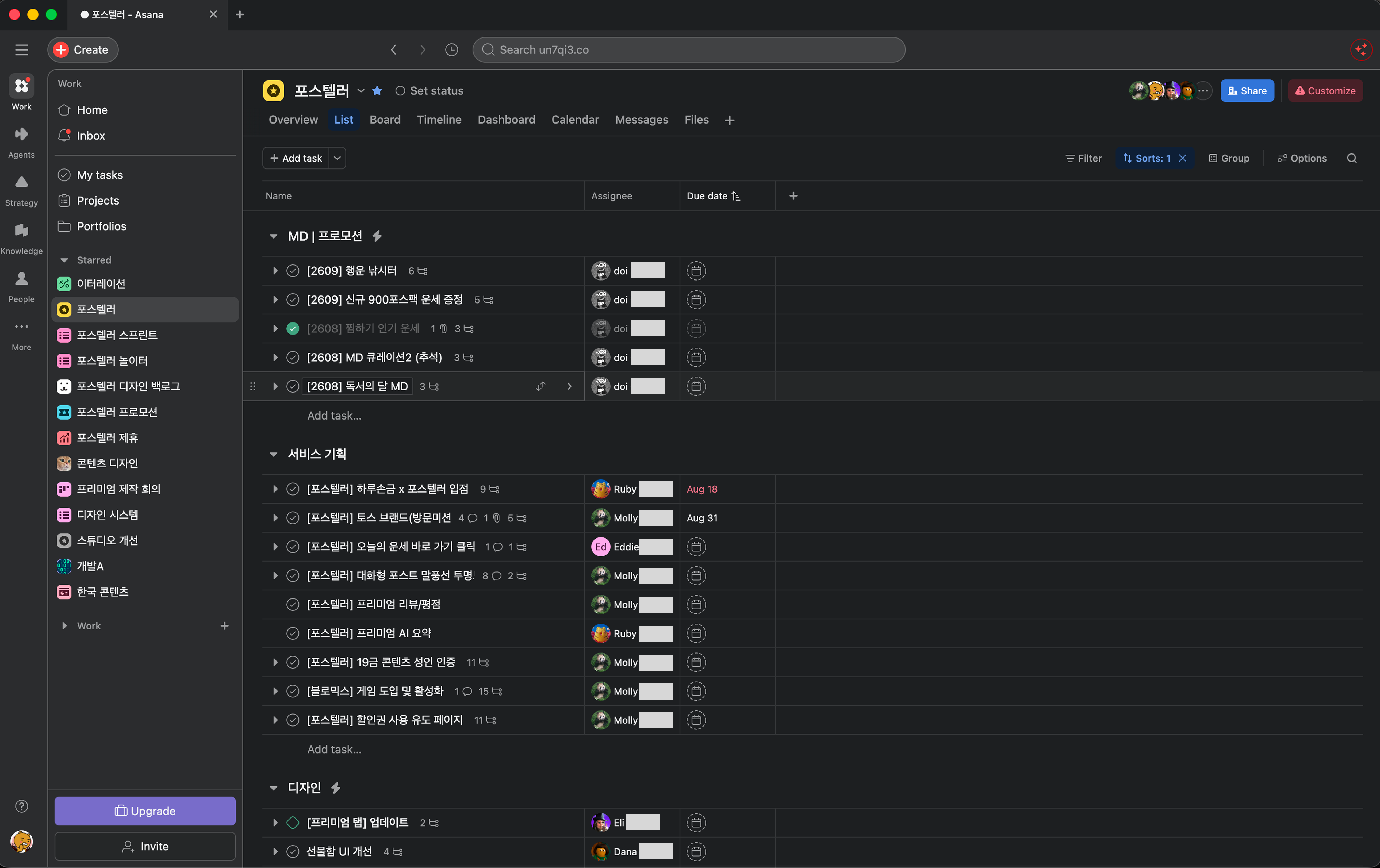
Today I lead the ten-person FORCETELLER business unit. I look across product improvement, merchandising, marketing, and operations to decide where the business should invest next.
New-user drop-off
44% → 38.4%

English-service first-screen redesign

Post-attributed purchases
199 → 660

Live Demand Week 8 → Week 9

Target purchases
290 · 1,971

First-purchase · 3-89 offers

AX in production
6 months

Six ad concepts generated each week

01

Global Growth

We started with the first screen, then improved acquisition and recommendations.

As Creative Lead, I clarified the English-service team’s structure and responsibilities and ran weekly data reviews and prioritization. After the team redesigned the first screen, new-user drop-off fell from 44% to 38.4%, leading to app-store page experiments and recommendation improvements.

02

Live Demand

It began with new users struggling to decide what to explore.

A day-seven new-user survey revealed confusion about what to view and demand for personalized recommendations. We started Live Demand and created a journey from a user’s current concern and a short conversation to relevant products.

After launch, we improved the assortment and card-based interface while monitoring exploration and purchase behavior. In-app messages and one-day benefits brought interested customers back; incremental repurchase remains a follow-up measurement question.

03

Lifecycle Offer

We did not treat first purchase and reactivation as the same discount problem.

We treated newly registered non-payers and existing customers inactive for more than 90 days as different problems. One offer lowered the barrier to a first purchase; another gave long-inactive customers a reason to buy again.

We observed 290 first purchases through the new-user offer and 1,971 purchases during the first 11 days of the 3-89 reactivation offer. Because these were uncontrolled operating observations, we did not present them as retention or incremental lift.

04

AX · Creative Operations

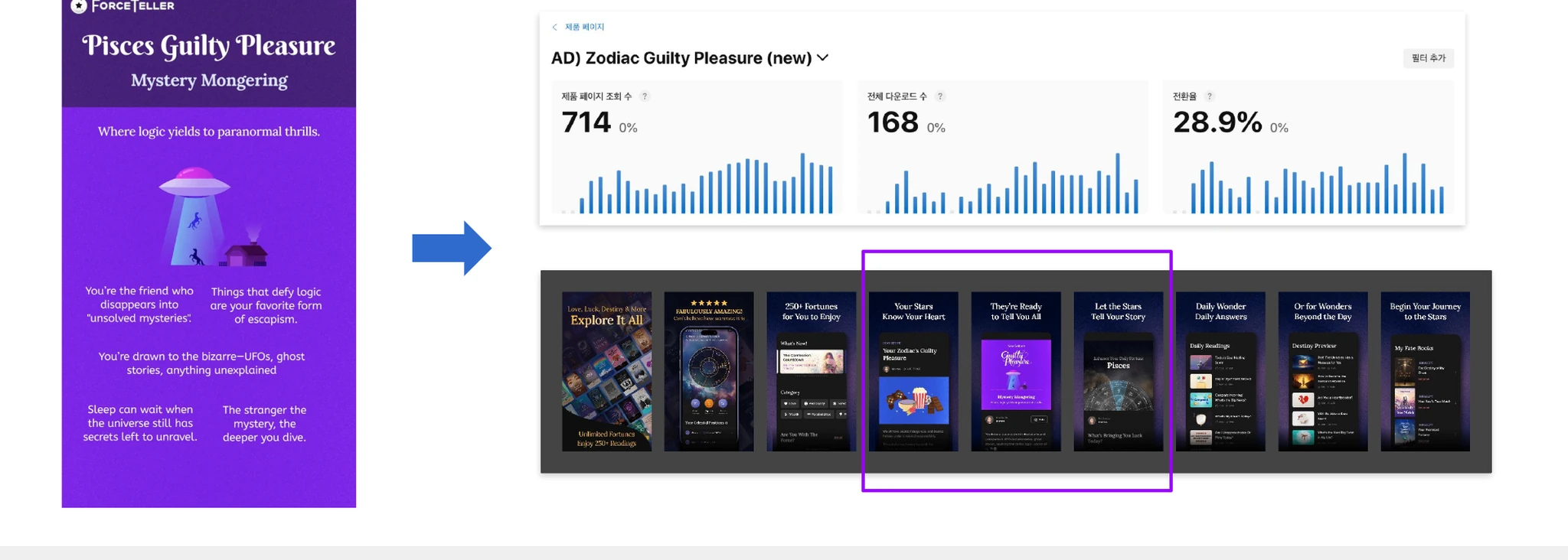
I automated the recurring research and planning behind weekly ads.

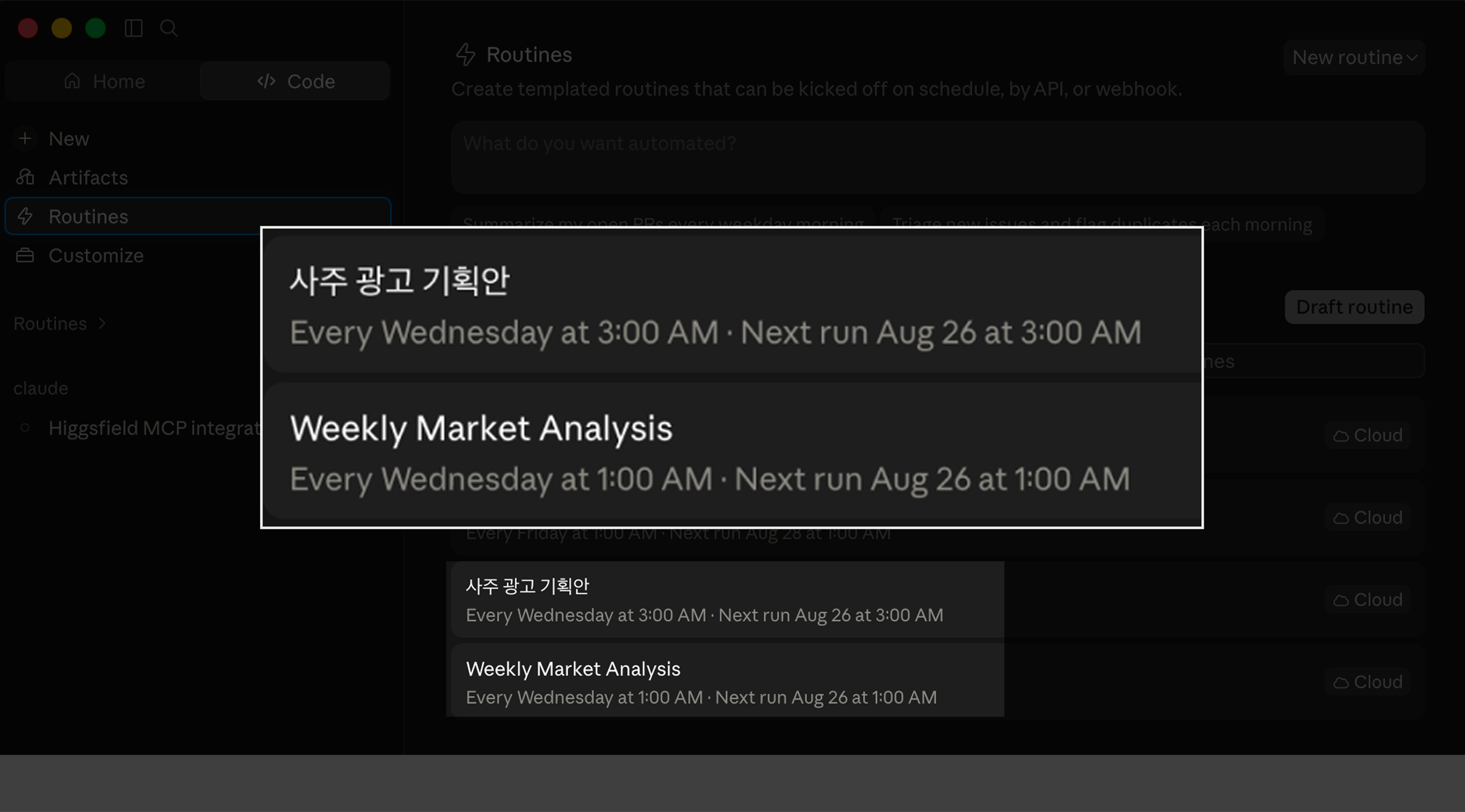
Using Claude Code and Notion, I automated competitor research, marketing analysis, and the creation of six weekly ad briefs and production prompts. The workflow has been running for six months, and I also use agents for meeting notes, data analysis, and strategy work.

This is a production case in research and ad creation. I am now exploring vibe coding; Figma AI and prototyping automation have not yet been introduced across the Product Design organization.

What’s next

I want to keep understanding customers and solving problems with a team.

My direct experience spans B2B SaaS and digital content services. I want to apply what I have learned from building products, growing teams, and running a business to more complex customer experiences.